
Social Psychology, Anti-Racism, and Culture Lab (SPARCL)
Welcome!
We are the Social Psychology, Anti-Racism, and Culture Lab led by Dr. Phia Salter. Located in Duke’s Psychology and Neuroscience department, we study racism and other forms of oppression from cultural psychological and critical race psychology perspectives. We are dedicated to understanding historical racism, historical dynamics of power, and their contemporary consequences for ongoing social inequalities today. Our primary interests of study include Critical Race Psychology (CRP), Cultural Psychology, and Collective Memory as perspectives to disrupting social injustice.
Critical Race Psychology (CRP)
CRP, integrates insights from Critical Race Theory and critical perspectives in psychological science. CRP highlights the role that racialized subjectivity has in both the construction of everyday realities, and the academic production of knowledge about those everyday realities. Below are some example questions and projects:
How can counter-storytelling reveal and disrupt the racial positioning of mainstream models, concepts, assumptions, and theorizing in psychology?
How do narratives that appear race-neutral on the surface (e.g., personal responsibility, meritocracy, and colorblindness) shape perceptions or denials of racial inequality?
Cultural Psychology
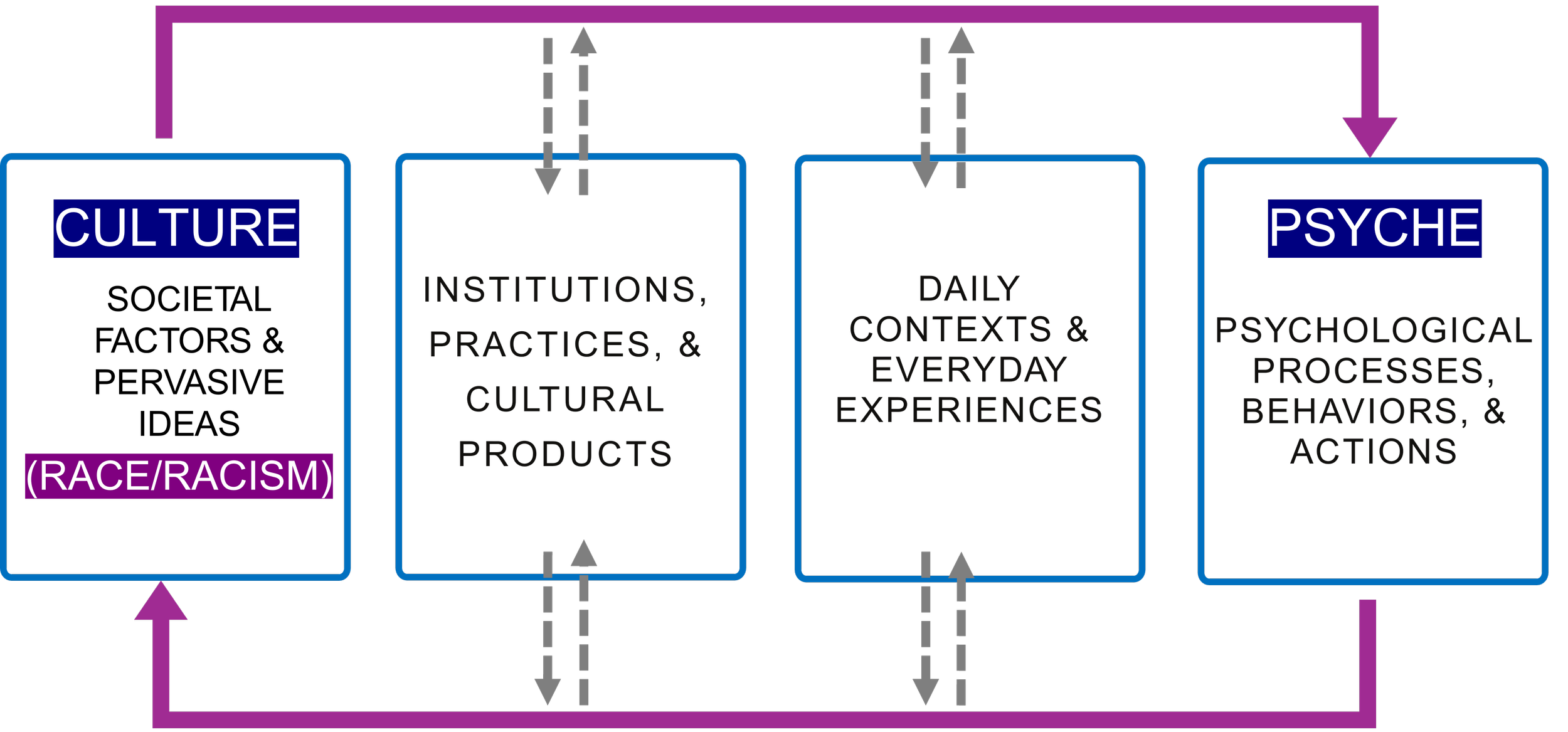
We investigate the bi-directional relationship between mind and culture. When applied to the topic of racism, this perspective directs attempts at anti-racist intervention away from focusing exclusively on individual tendencies and instead pushes the field of psychology to focus on changing contexts that reflect and reproduce racial domination
We investigate racism as a cultural psychological process that can offer three key insights:
Racism, like culture is embedded in our everyday worlds.
Societal structures that maintain racialized contexts in everyday contexts are not just natural. Our preferences, selections and practices build, reproduce, and maintain racist (or anti-racist) structures.
We inhabit cultural worlds that promote racialized ways of seeing, being in, and acting in the world.
History & Collective Memory
People do not typically have firsthand knowledge of foundational historical events; so, cultural repositories of memory like school classrooms, textbooks, museums, and/or national holidays necessarily facilitate our access to the historical past. However, these cultural sites of memory are not neutral or objective accounts of past realities; instead, our identities and emotions impact what we remember and share about the past. In this vein, we ask two questions to understand the relationship between collective memory, history, and identity:
How do different accounts of the historical past shape our identities, our beliefs, and our actions in the present?
How do current beliefs, identities, and cultural practices shape what we ‘know’ about the historical past?
What social and cultural processes lead people to (re)produce some historical narratives rather than others?